

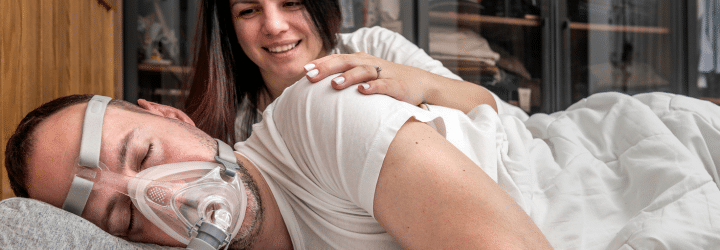
One of the leading treatments for sleep apnea (OSA) is CPAP. While it does work for many patients, the mask, airflow, dry mouth, nasal congestion, or the machine noise itself may make it challenging to use at home every night. Sometimes, patients who understand the risks of not treating sleep apnea on their quality of life (energy levels, concentration, mood, sleep, etc.) have an option for selected patients. These patients can breathe more easily while sleeping at home, rather than having to rely on the CPAP device to assist them.
There are multiple different non-CPAP treatments for sleep apnea to choose from. Which one is right for you will depend on the severity of your symptoms, airway anatomy, nasal breathing, weight, medical history, and sleep study results. An ear, nose, and throat (ENT) doctor, also known as an otolaryngologist, can evaluate your nose, throat, tonsils, soft palate, and base of the tongue in addition to your airway. This exam helps the doctor pinpoint areas that may be obstructing your normal breathing during sleep.
Resource: emedicine.medscape.com
Table of contents
- What Is Sleep Apnea?
- When Non-CPAP Sleep Apnea Treatment Can Help
- Oral Appliance Therapy for Sleep Apnea
- Nasal Obstruction Treatment
- Throat and Airway Surgery
- Positional Therapy and Lifestyle Changes
- Choosing the Right Sleep Apnea Treatment Without CPAP
- FAQs About Non-CPAP Therapy for Sleep Apnea
- Is Snoring Always a Sign of Sleep Apnea?
- How Can Sleep Apnea Be Treated?
- Why Choose Colorado ENT and Allergy?
- Final Thoughts
Estimated reading time: 7 minutes
What Is Sleep Apnea?
Sleep apnea is a sleep-disordered breathing condition characterized by recurrent breathing pauses at nighttime. Obstructive sleep apnea is the most common form. This happens when a soft piece of tissue relaxes in the back of the throat. When this happens, air is blocked from reaching your lungs.
Resource: mayoclinic.org
Common symptoms of sleep apnea include:
- Loud snoring
- Choking
- Gasping episodes during sleep
- Headaches
- Dry mouth
- Disrupted sleep
- Daytime sleepiness
- Lack of focus
- Moodiness
A diagnosis of sleep apnea typically involves testing with a sleep study.
When Non-CPAP Sleep Apnea Treatment Can Help
Non-CPAP treatment for sleep apnea is an option when the CPAP device causes discomfort or is intolerable to use, or if it does not work as expected. An ENT evaluation can help if the source of the sleep breathing disorder involves multiple areas. For example, sleep apnea can be due to a deviated septum, enlarged turbinates, chronic nasal allergy swelling, nasal polyps, large tonsils, long soft palate, or tongue-base collapse. These are all areas that can make the airway more narrow. Addressing the root of the obstruction will help reduce snoring, choking episodes, and frequent nighttime waking.
Oral Appliance Therapy for Sleep Apnea
Oral appliance therapy for sleep apnea is a CPAP-free treatment option commonly used for mild to moderate obstructive sleep apnea. A dental oral appliance for sleep apnea is worn during sleep. It fits like a mouthguard and moves the lower jaw into a slight forward position. This position helps keep the airway from closing.
Many patients inquire about dental appliance therapy because the size of the device is small, there is no noise associated with the use of the appliance, and it travels well with them. Your provider for sleep medicine may be your dentist. Your provider will fit the appliance. Then, you may undergo a follow-up sleep test to ensure that the device is being used appropriately, as well as to ensure that it is effective in your treatment.
Resource: my.clevelandclinic.org
Nasal Obstruction Treatment
Nasal obstruction can lead to or worsen sleep apnea symptoms and make CPAP use difficult. An ENT may examine the nose with a small camera, known as an endoscope. With the help of the camera, a doctor can assess the presence of chronic swelling, nasal polyps, deviated septum or turbinate, or chronic sinus disease.
Nasal allergy management, nasal steroid sprays, saline rinses, and anti-inflammatory medication may help improve sleep apnea if allergies are a major contributing factor. Surgery may be considered if anatomical structural issues are the source of the problem. An ENT may recommend septoplasty if you have a deviated septum or turbinate reduction surgery if large turbinates are narrowing the airway. Functional endoscopic sinus surgery may be used if the nasal problem involves chronic sinus disease or nasal polyps. Balloon sinuplasty may be an option if nasal sinus blockage is the concern.
Throat and Airway Surgery
Sometimes the airway blockage happens in the throat rather than the nose. For example, tonsils can become large enough to obstruct the airway during sleep. In those cases, a tonsillectomy might be an option. Procedures that focus on the soft palate, uvula, or base of the tongue can also be used to try to open the airway and prevent it from collapsing while you sleep. Before you commit to surgery, make sure you have had a complete sleep apnea workup, a review of your sleep study data, and a conversation with your doctor about the advantages, disadvantages, and recovery times of the surgery you are considering.
Positional Therapy and Lifestyle Changes
If you have positional sleep apnea, which happens when you sleep on your back, positional therapy may help. Positional therapy uses a wearable device, a pillow, or other methods designed to encourage sleeping in a different position. Weight can play an important role in your airway size and the likelihood of experiencing sleep apnea during sleep. Weight loss may help with sleep apnea in some cases. Alcohol, sleeping pills, and smoking may also make sleep apnea worse in some cases and may raise the risk of swelling or airway collapse during sleep. Other changes that can be helpful include practicing good sleep hygiene, exercising on a regular basis, and treating nasal allergies.
Choosing the Right Sleep Apnea Treatment Without CPAP
There is no “one size fits all” non-CPAP treatment for sleep apnea. To find a safe and effective treatment, you must first be diagnosed, have your sleep study results reviewed, and have your airways examined. If you have mild sleep apnea, you might respond well to oral appliance therapy, positional therapy, or lifestyle changes alone. However, if you have moderate-to-severe sleep apnea, you may need more than one type of non-CPAP treatment, and you may need close monitoring during sleep. In some cases, your sleep apnea may be best treated using a CPAP mask at home.
FAQs About Non-CPAP Therapy for Sleep Apnea
Can Sleep Apnea Be Treated Without CPAP?
Yes. It may be possible to treat mild sleep apnea with oral appliance therapy, positional therapy, weight loss, nasal treatment, or throat surgery.
What Is the Best Non-CPAP Therapy for Sleep Apnea?
Non-CPAP therapy for you depends on the location and reason for your airway obstruction. Oral appliance therapy is often used to treat mild to moderate obstructive sleep apnea, especially in people who can’t use a CPAP mask. Surgery may be useful if your sleep apnea involves nasal obstruction, throat swelling, tonsils, the uvula, or the base of the tongue.
Can an ENT Help with Sleep Apnea?
Yes, an ENT can help you evaluate the airways and identify structural problems that may be causing sleep apnea. This includes the inside of the nose, tonsils, soft palate, uvula, or base of the tongue.
Does Nasal Surgery Cure Sleep Apnea?
Nasal surgery may help certain patients breathe more easily through their noses. However, it does not cure all cases of sleep apnea.
Is Snoring Always a Sign of Sleep Apnea?
Not always. Snoring can occur in people with and without sleep apnea. Loud snoring that is accompanied by gasping, snorts, breathing pauses in sleep, morning headaches, or daytime tiredness is more likely to be sleep apnea and should be evaluated by a doctor.
How Can Sleep Apnea Be Treated?
The use of a continuous positive airway pressure (CPAP) machine remains the gold standard in treating sleep apnea. However, there are many patients who cannot tolerate using a CPAP for a variety of reasons. Alternatively, a mandibular oral appliance, which moves your jaw forward, is another non-surgical option. Surgical options can also involve soft tissue surgery depending on your anatomy or possibly implanting a device called Inspire. Inspire is a newer technology that is a hypoglossal nerve stimulator. Essentially, it’s a pacemaker for your tongue. While asleep, the Inspire device sends small pulses to your tongue to open the airway and prevent obstructive events.
Why Choose Colorado ENT and Allergy?
We have a focus on treating obstructive sleep apnea for all patients who can’t tolerate CPAP. We can do this conservatively with non- surgical options such as Excite OSA or via soft tissue surgery, hyoid suspension, or through hypoglossal nerve stimulator therapy (Inspire). The most important focus is that you understand the severity of the disease and your options for treatment. Plus, as the only recognized Inspire provider of excellence in the Southern Colorado region, our team is committed to making sure every implant patient is treated with the best care and with the best team in the region.
Final Thoughts
Sleep apnea can cause a range of symptoms that may affect every aspect of your daily life. Daytime sleepiness, lack of focus, morning headaches, mood swings, high blood pressure, heart problems, and other health problems are common among patients with untreated sleep apnea. CPAP remains the gold standard of treatment for moderate-to-severe sleep apnea. If you are suffering from these symptoms, consult with a board-certified ENT to learn more about your treatment options.