

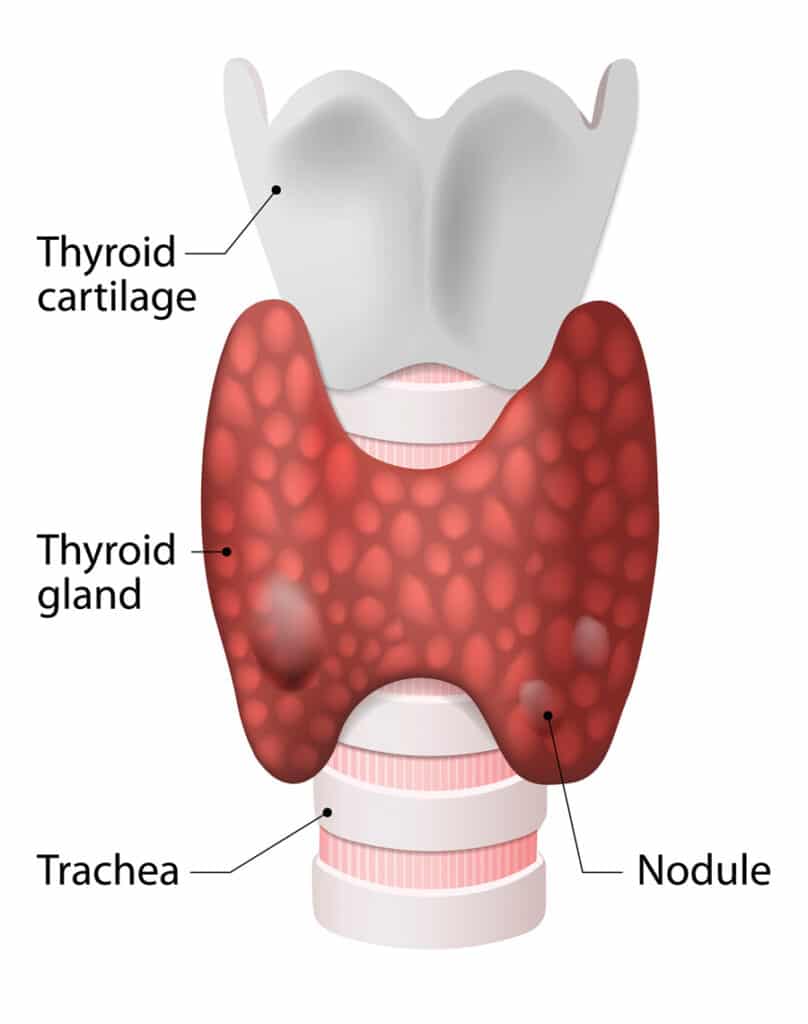
Thyroid nodules are very common and are increasingly detected due to the widespread use of imaging modalities such as ultrasound, CT, and MRI. A thyroid nodule is a lump or growth within the thyroid gland, a small butterfly-shaped gland located in the lower front of the neck that plays a critical role in regulating metabolism, energy levels, heart rate, and body temperature. While the majority of thyroid nodules are benign, proper evaluation is essential to rule out cancer and determine the most appropriate management plan.
Resource: mayoclinic.org
Initial Evaluation and Workup
The evaluation of a thyroid nodule begins with a thorough medical history and physical examination. Important factors include rapid growth of the nodule, hoarseness, difficulty swallowing or breathing, prior radiation exposure to the head or neck, and a family history of thyroid cancer. During the physical exam, your provider will assess the size, firmness, and mobility of the nodule, as well as check for enlarged lymph nodes in the neck.
The most important diagnostic test for thyroid nodules is a high-resolution neck ultrasound. Ultrasound allows us to assess the size, number, and characteristics of nodules, such as whether they are solid or cystic, have irregular borders, or contain calcifications. These features help stratify the risk of malignancy and guide further management.
Blood work is also commonly performed, including measurement of thyroid-stimulating hormone (TSH). This helps determine whether the thyroid is functioning normally, overactive, or underactive, which can influence additional testing and treatment decisions.
Possible Diagnoses
Most thyroid nodules are benign, meaning they are not cancerous. Common benign diagnoses include colloid nodules, benign follicular adenomas, and cysts. Some nodules are associated with conditions such as multinodular goiter or thyroiditis.
A smaller percentage of thyroid nodules are malignant. The most common type of thyroid cancer is papillary thyroid carcinoma, which generally has an excellent prognosis when detected early and treated appropriately. Other less common cancers include follicular, medullary, and anaplastic thyroid carcinoma.
Fine Needle Aspiration (FNA) Biopsy
If a thyroid nodule meets certain size or ultrasound criteria, a fine needle aspiration (FNA) biopsy is recommended. This is a minimally invasive, office-based procedure performed using a thin needle, often under ultrasound guidance. The goal of FNA is to obtain cells from the nodule for microscopic analysis by a pathologist.
FNA biopsy is the most accurate and reliable method for distinguishing benign from malignant thyroid nodules. Results typically fall into several categories, including benign, malignant, indeterminate, or non-diagnostic. Based on these results, further management recommendations can be made.
Management Options
Observation is appropriate for many patients with benign thyroid nodules. This typically involves periodic ultrasound examinations to monitor for growth or changes in appearance. Many nodules remain stable for years and never require surgery.
Surgical intervention may be recommended in certain situations, including confirmed or suspected thyroid cancer, indeterminate biopsy results, significant nodule growth, compressive symptoms such as difficulty swallowing or breathing, or cosmetic concerns.
A thyroid lobectomy involves the removal of one half of the thyroid gland and is often recommended for indeterminate nodules or small, low-risk cancers confined to one side of the thyroid. Many patients maintain normal thyroid hormone levels after lobectomy and do not require lifelong medication.
Total thyroidectomy involves the removal of the entire thyroid gland and may be recommended for larger or more aggressive cancers, cancer involving both sides of the thyroid, or certain benign conditions causing significant symptoms. After total thyroidectomy, patients require lifelong thyroid hormone replacement, which is typically well-tolerated and closely monitored.
Expert Care at Colorado ENT & Allergy
At Colorado ENT & Allergy, our surgeons are experts in the comprehensive evaluation and management of thyroid nodules. We utilize state-of-the-art ultrasound technology, evidence-based guidelines, and a patient-centered approach to ensure accurate diagnosis and individualized treatment planning.
Our thyroid surgeons have extensive experience performing both thyroid lobectomy and total thyroidectomy with a strong focus on safety, precision, and optimal outcomes. We prioritize nerve monitoring, meticulous surgical technique, and coordinated postoperative care to minimize risks and support rapid recovery.
From initial evaluation to long-term follow-up, Colorado ENT & Allergy provides expert, compassionate care for patients with thyroid nodules. If you have been diagnosed with a thyroid nodule or have concerns about your thyroid health, our team is here to guide you every step of the way.